We are very happy to have this great Ethiopian coffee in our range.
SASABA is a washed coffee from the Guji region in EthiopiaWe roast it asfilter coffeevery bright around thefine fruity and floral aromasto emphasize what suits him exceptionally well.
TheSASABAis asuper fine,light coffeeand convinces withcomplex fruit and floral elements TheStructure is tea-like and theSweetness is beautifully pronounced. The acidity is harmonious and reminiscent of stone fruit.
We tasteBlackberry, red grape, peach, bergamot and black tea, as well as some lilac blossomThe light body harmonizes very well with the fruity, floral aromas.The acidity is well integrated, juicy and balanced. A great coffee for warm and cold days.
Incredibly well balanced, super soft and complex with a great mouthfeel and long-lasting sweetness!
Flavors:Blackberry, red grape, peach, bergamot, black tea, lilac blossom
producer: Sasaba Washing Station / Tsegay Hagos Tesfaye
Region:Guji
Mounting height:2150 masl
Harvest: 2024
Processing:fully washed
FOB: USD 3.98/lb or EUR 8.04/kg green
Farm Gate: ETB 57/kg of cherry > EUR 0.93/kg of cherry > EUR 6.05/kg
The way to the Sasaba washing station
Head south on the Addis Ababa-Moyale highway, past Yirgacheffe and through the region's otherworldly, cloud-capped mountains until you finally reach the bustling town of Bule Hora.
From Bule Hora, older roads wind their way, strikingly different from the new highway that leads to them and much more challenging.
In this fertile area of the Kercha District, Tsegay Hagos Tesfaye, the founder and owner of Sasaba, has built two washing stations and dry mills that supply Trabocca - one of which is Sasaba.
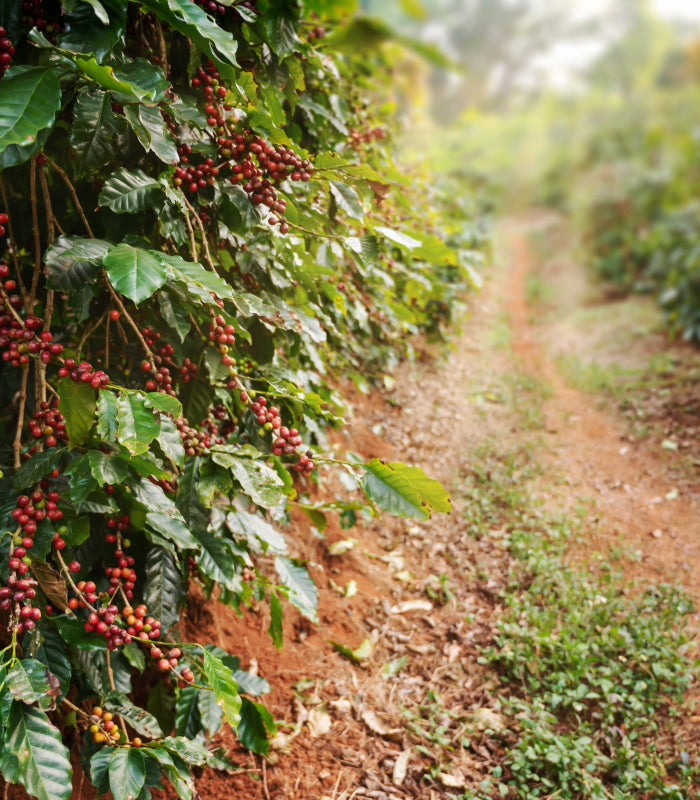
Equipped with a large pulper and over 600 African drying beds, Sasaba processes coffee from over 500 smallholder farmers working in the hills surrounding the wetmill. Like much of Kercha, the small plots around Sasaba are located at elevations around 2,000 meters.
The Sasaba smallholders
Sasaba's smallholder farmers are a mix of Gedeo and Guji farmers, many of whom have lived here for generations and cultivated coffee side by side. Similar to the rest of Kercha District, most farmers in this area are Protestant Christians. Their coffee grows on the slopes of the hills surrounding Sasaba in the shade of a mix of existing forest trees and trees planted by the farmers, such as enset (false banana) trees.
Processing in Sasaba
At Sasaba's washing facility, red cherries are collected from late October to December and brought to the Sasaba washing facility. Cherries destined for washed processing are processed on-site and fermented for approximately 48 to 72 hours before being placed on drying beds for approximately 7 to 8 days. Natural cherries are typically dried for 15 to 20 days.
“Sasaba does not grow alone” Tsegay Hagos Tesfaye
Tsegay Hagos knows that the success of the Sasaba mill is closely linked to that of the smallholder farmers. "Sasaba doesn't grow alone," he says, adding, "We support and train our farmers so that they can one day export their own coffee."
The company has a very close relationship with the farmers it works with and is always ready to help them - whether it is transportation for medical emergencies or loans during the lean months of the rainy season.
"We're on their side, no matter what," says Tsegay, "and that's why they're on our side," he adds. This creates a virtuous circle in which both smallholder farmers and mills benefit from better coffee and better sales.
Unsere Filter Röstung ist generell heller als die Espresso Röstung und speziell für die Verwendung in allen Arten von Handfiltern, AeroPress, Switch, Syphon, Pulsar und Moccamaster optimiert. Diese Röstung bringt die Fruchtigkeit und Süße des Kaffees hervorragend zur Geltung und wird nicht für die Verwendung in Vollautomaten empfohlen, unabhängig vom Röstgrad.
Helle Röstung
Die helle Röstung, mit einer Röstdauer von 7 bis 10 Minuten, betont vor allem fruchtige Aromen, ohne dominante Röstaromen. Der Körper kann von leicht bis mittel variieren, wobei oft eine erhöhte Säure feststellbar ist. Diese Röstung ist ideal für Liebhaber von fruchtigen und floralen Kaffees.
Kaffeeanbau Äthiopien
Äthiopien wird als die Wiege des Kaffees angesehen, mit einer faszinierenden Entdeckungsgeschichte, die auf Ziegen und ihren Hirten Kaldi zurückgeht. Äthiopischer Kaffee ist für seine große Vielfalt an Heirloom-Varietäten bekannt, die in keiner anderen Region der Welt zu finden sind. Die Bohnen aus Äthiopien bieten oft blumige und fruchtige Aromen und sind berühmt für ihre Qualität und Einzigartigkeit.
Newsletter
Stay up to date, be the first to hear about our promotions and read the latest articles.
Use left/right arrows to navigate the slideshow or swipe left/right if using a mobile device
Choosing a selection results in a full page refresh.